More than 130 eventful years – and no end in sight.
From a journeyman printer from Meissen to a certified security printer: the Haubold story is one of courage, specialisation and family – through two world wars, currency reform and a pandemic, now in the fifth generation.
The history of Haubold
From a small jobbing print shop on Neuer Steinweg to a certified security printer – the chronicle of our company.
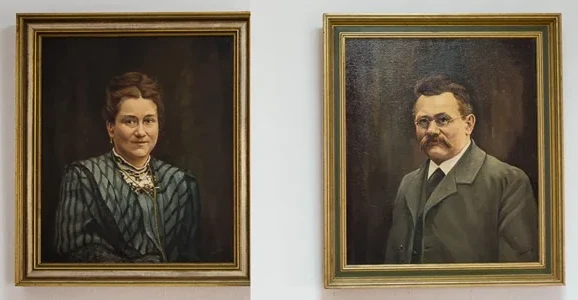
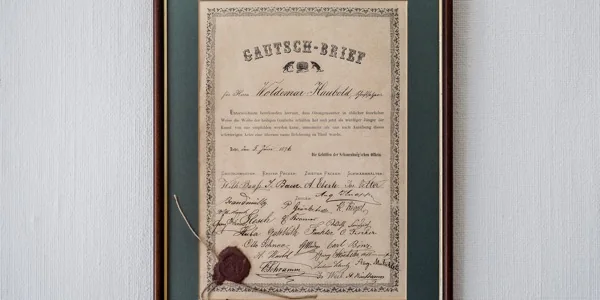
Company founder Woldemar Haubold was born in Meissen in 1856. He completed his five-year apprenticeship at the renowned Cotta printing works in Meissen and, as was customary, went on his journeyman travels. When a small print shop in Eschwege was looking for a capable employee in 1891, he applied and was hired.
A year later he married the owner, Elise Steinmetz, widowed Illge. From 1893 – the year their son Paul Woldemar was born – the two worked together, printing small jobbing work and the Fulda-Werra-Zeitung newspaper.
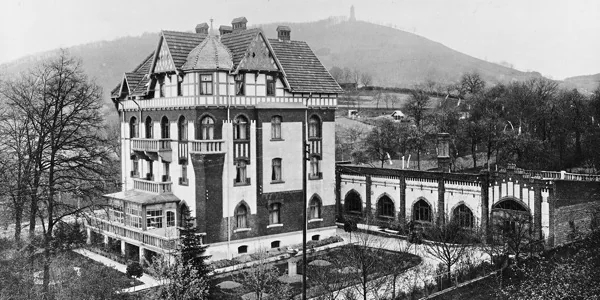
In 1895 the first move followed with the purchase of a house on Neuer Steinweg, to gain more room for typesetting and machines. Soon this space was too small as well, and Woldemar Haubold bought a plot on Leuchtbergstrasse.
In 1903 the print shop moved into the ground floor of the newly built residence.
Son Paul Woldemar joined as an apprentice. At this time Woldemar Haubold decided to specialise in producing numbered admission tickets.
A risky decision then, for there were no large cinemas or theatres yet – only small travelling cinemas playing in tents or halls, concert gardens, rural theatres and circuses. With this courageous decision he laid the foundation for the later success of the Haubold print works.
In 1909 construction of the factory building behind the residence began; it was extended in 1912.
In 1917 founder Woldemar Haubold died at the age of 61. His wife Elise took over the print works and handed it over to their son Paul in 1926.
The First World War cost Haubold its foreign markets. Specialisation had led to products being delivered as far as Norway in the north, Sicily in the south and Spain in the west – certain products even went to New York.
Large circuses such as Hagenbeck and Busch sourced their tickets from Haubold on every tour. Inflation in the 1920s wiped out the painstakingly saved operating capital.
The business was expanded, new special and auxiliary machines were purchased, the production range was extended and sales representatives were hired to bring in new orders. The Second World War brought shortages of material; many orders stayed away and many employees were called up.
Paul W. Haubold's eldest daughter Marlis, born in 1922, studied economics in Leipzig and Frankfurt, where she met her future husband Günter Gebhardt. At 22 she passed her doctoral examination with distinction in February 1945 – one of the youngest women in Germany to earn a doctorate.
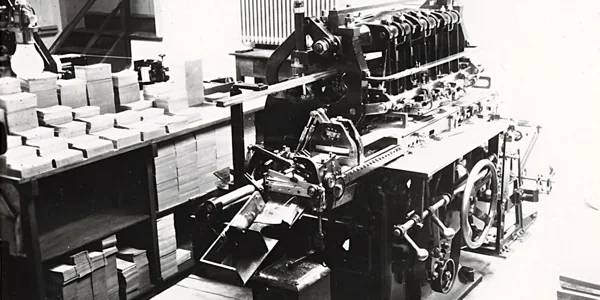
After the end of the Second World War the Americans entered Eschwege and also occupied the print works. Paul W. Haubold was suspended because of his proximity to the regime; he had not been a party member but a supporting member, and was denazified.
His daughter Dr Marlis Haubold took over the management of the company in May 1945. During this time the company was entrusted with printing ration cards, among other things. Günter Gebhardt, born in 1920, already worked as Haubold's representative in Frankfurt while completing his doctorate in 1946.
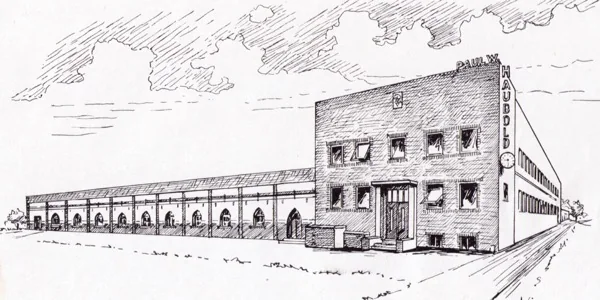
In May 1947 Dr Marlis Haubold and Dr Günter Gebhardt married, and he joined the company. At first he learned printing – at a time when paper was scarce and could only be obtained in exchange for waste paper.
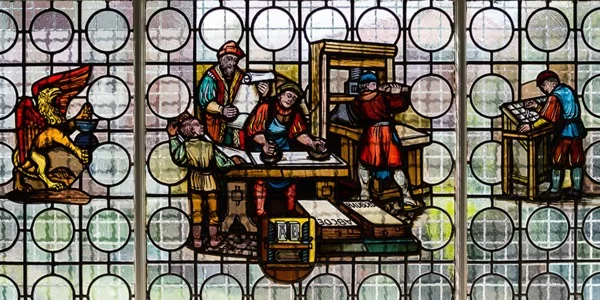
After the currency reform in June 1948, printing paper could finally be bought again. Under senior partner Paul W. Haubold, who had returned to work, Dr Günter Gebhardt took on more and more management tasks. By 1951 much had been expanded: a larger rotary press hall, warehouse and dispatch department totalling 3,000 m².
Because of the uncertain political situation at the zonal border, Paul Haubold asked his son-in-law to set up a branch west of the Rhine: in March 1951 Dr Günter Gebhardt & Co. was founded in Idar-Oberstein.
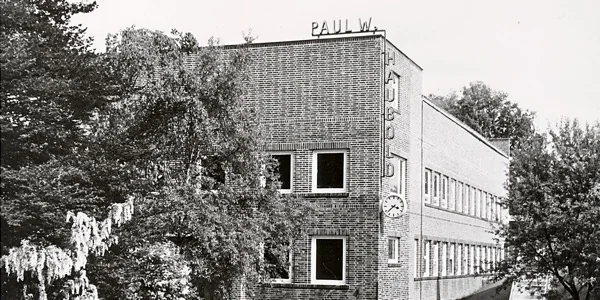
Haubold made up for its 50th anniversary, which should have been celebrated in 1943 – in wartime there had been no opportunity to do so.
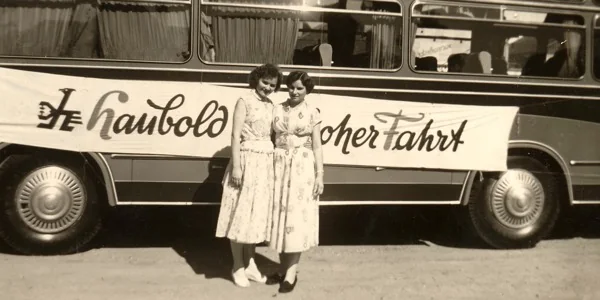
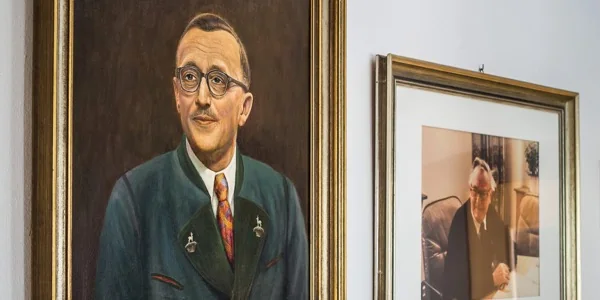
After the death of senior partner Paul W. Haubold in December 1956, the sole proprietorship was converted into a limited partnership. Dr Günter Gebhardt became managing partner – an office he held until his death in February 2009.
He continually built up the company, enlarged the production space and the workforce, and developed Haubold into a specialist for numbered organisational print products.
From the 1980s the development and spread of computer technology led to far-reaching restructuring of production technology at Haubold. Rising quality requirements led to continuous investment.
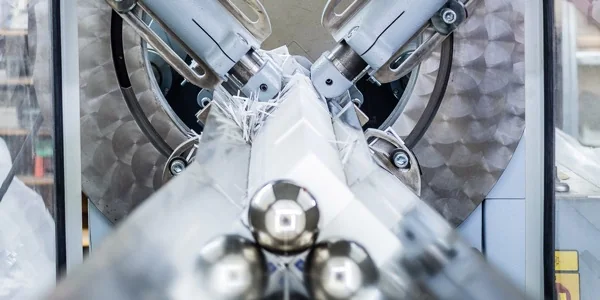
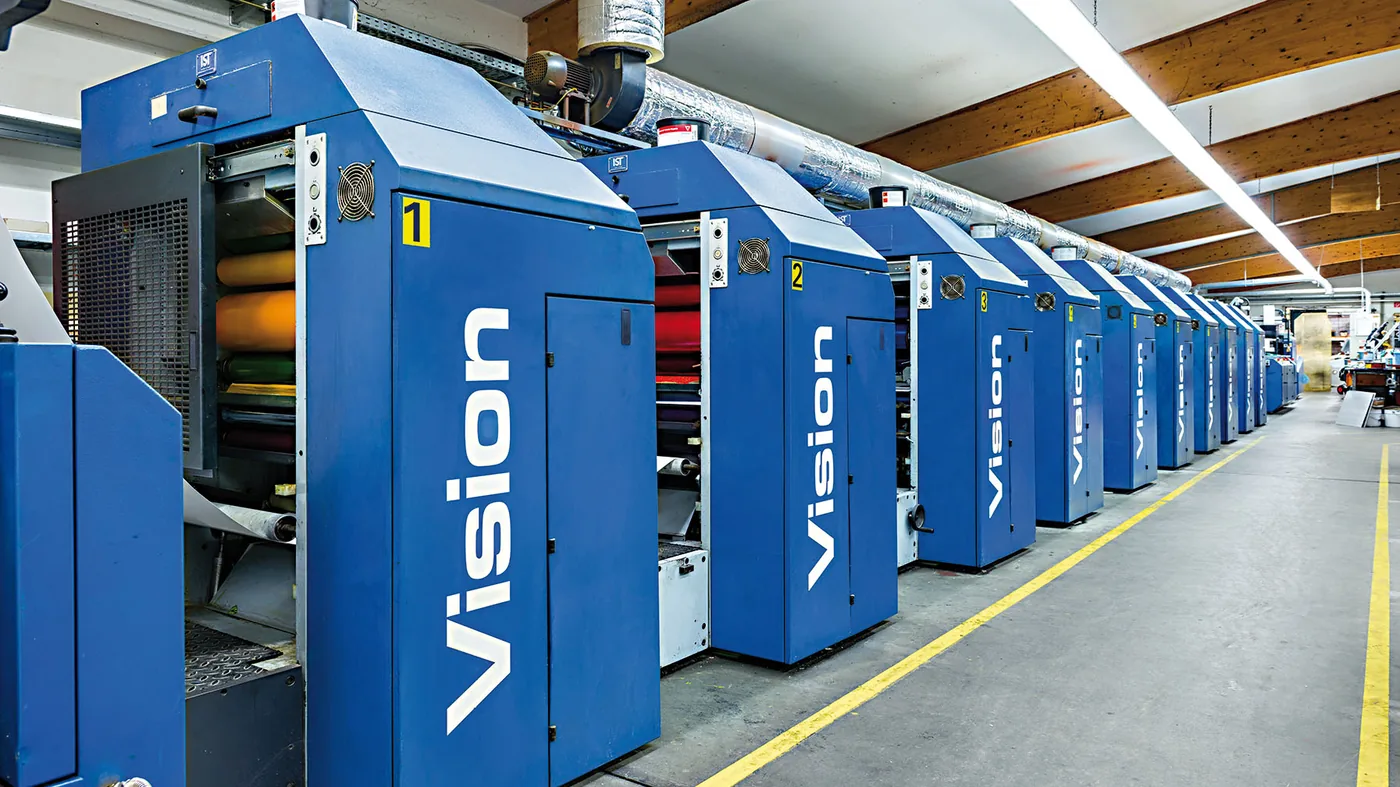
Digital presses, ten-colour web offset presses, inline converting technology and hologram application machines were the main focus of investment.
In 2013, after an interim period, the Sperling family came to hold all shares of the Haubold group. In December 2013 the company celebrated its 120th anniversary almost to the day. The family business passed into the fifth generation and has since been led by great-great-grandson Felix Paul Sperling.
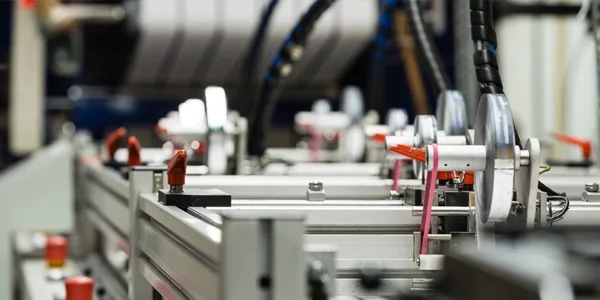
In 2014 the partners invested heavily in machinery. The highlight is a fully automated winding robot with connected processing line, which automates roll converting and significantly increases efficiency.
In 2015 the first certification as a security printer to ISO 14298 marked a major step towards the future. Haubold also continuously holds certificates for quality management to ISO 9001 and sustainable paper to FSC®.
From 2020 to 2022 the world experienced an unprecedented catastrophe with the coronavirus pandemic. The collapse in demand for tickets and transport tickets hit Haubold hard; business operations were adapted to the new circumstances.
In 2024 Felix Sperling, now operational managing director of all three Haubold companies, realigns the group. Together with his young and highly motivated management team, company processes were optimised. Tickets, transport tickets and security printing remain the focus of the product portfolio.
In 2025 Haubold is once again certified as a security printer to ISO 14298.
Let’s talk.
We advise you personally on security features, materials and processes – and will gladly send you our brochure with original samples.